Our Clients

  • Schineder Electric
  • KSIA - Korea Semiconductor Industry Association
  • Hitachi Astemo Limited
  • Samsung Electronics
  • Halvo holdings
  • NTT corporation
  • AGC Inc
  • Siemens AG
  • Unilever
  • Merck Pharmaceuticals
  • Atlas Copco
  • Hologic - Medical Technology company
  • Novartis
  • Henkel
  • Reckitt
  • Schineder Electric
  • KSIA - Korea Semiconductor Industry Association
  • Hitachi Astemo Limited
  • Samsung Electronics
  • Halvo holdings
  • NTT corporation
  • AGC Inc
  • Siemens AG
  • Unilever
  • Merck Pharmaceuticals
  • Atlas Copco
  • Hologic - Medical Technology company
  • Novartis
  • Henkel
  • Reckitt
  • FAQs

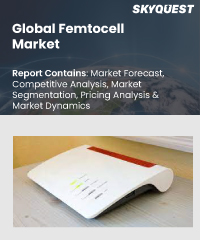
    Femtocell Market size was valued at USD 8.56 Billion in 2024 and is poised to grow from USD 9.78 Billion in 2025 to USD 28.28 Billion by 2033, growing at a CAGR of 14.2% during the forecast period (2026–2033).

    The competitive landscape of the global femtocell market is marked by intense rivalry among key players striving to capture a significant share. Established telecom equipment manufacturers, technology firms, and network solution providers compete in this dynamic sector. Companies such as Nokia, Ericsson, Huawei, and Samsung have established themselves as formidable contenders due to their extensive expertise in network infrastructure. 'Nokia (Finland)', 'Ericsson (Sweden) ', 'Huawei (China) ', 'Samsung Electronics (South Korea) ', 'ZTE Corporation (China) ', 'Cisco Systems (USA) ', 'NEC Corporation (Japan) ', 'Airspan Networks (USA) ', 'CommScope (USA) ', 'Baicells Technologies (China) ', 'Accelleran (Belgium) ', 'Sercomm Corporation (Taiwan) ', 'Casa Systems (USA) ', 'Nokia Networks (Finland) ', 'Comba Telecom Systems (China) ', 'Ubee Interactive (Taiwan)'

    The widespread adoption of smartphones, coupled with the increasing consumption of data-intensive applications, fuels the demand for femtocells to enhance network performance and user experience.

    5G Integration: As 5G networks roll out, femtocells are evolving to support 5G connectivity. Femtocells can enhance indoor coverage for 5G networks, meeting the demands of increased data rates and low latency.

    In the global femtocell market, North America holds a paramount position and is poised to register a CAGR of 16.9% over the projected period. Fueled by a relentless pursuit of technological, scientific, and business advancements, North America has forged an advanced network infrastructure that rapidly caters to end-user demands and forms a cohesive network ecosystem. The expeditious rollout of LTE technology across the 700 Megahertz (MHz) spectrum by American telecommunications providers has significantly bolstered the worldwide prominence of American cellular and internet services. Within North America, femtocells stand as market leaders due to their capability to offer more sophisticated applications compared to conventional cellular Wi-Fi solutions. Leveraging core network technology, femtocells not only attract new customers but also retain the loyalty of existing clientele. With the global proliferation of smartphones attributed to declining handset prices, the demand for femtocells continues to ascend.

    Feedback From Our Clients

    Global Femtocell Market

    Report ID: SQMIG50C2022

    $5,300
    BUY NOW


