To request a free sample copy of this report, please complete the form below.

Our Clients

  • Schineder Electric
  • KSIA - Korea Semiconductor Industry Association
  • Hitachi Astemo Limited
  • Samsung Electronics
  • Halvo holdings
  • NTT corporation
  • AGC Inc
  • Siemens AG
  • Unilever
  • Merck Pharmaceuticals
  • Atlas Copco
  • Hologic - Medical Technology company
  • Novartis
  • Henkel
  • Reckitt
  • Schineder Electric
  • KSIA - Korea Semiconductor Industry Association
  • Hitachi Astemo Limited
  • Samsung Electronics
  • Halvo holdings
  • NTT corporation
  • AGC Inc
  • Siemens AG
  • Unilever
  • Merck Pharmaceuticals
  • Atlas Copco
  • Hologic - Medical Technology company
  • Novartis
  • Henkel
  • Reckitt
  • FAQs

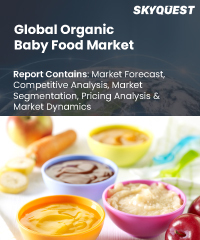
    Organic Baby Food Market size was valued at USD 4.57 Billion in 2024 and is poised to grow from USD 4.97 Billion in 2025 to USD 9.68 Billion by 2033, growing at a CAGR of 8.7% during the forecast period (2026–2033).

    In order to compete in the organic baby food market, businesses are concentrating on creating new marketing strategies and launching new products based on value-added ingredients. Abbott Laboratories, Nestle SA, The Hein Celestial Group, and Danone SA are a few of the market's major players in organic baby food. Private-label brands are widely available, with supermarket and hypermarket chains dominating developed markets, while traditional grocers, convenience stores, specialty retailers, and health stores dominate developing nations. ​ As consumer demand for natural and organic products continues to grow, it is likely that more companies will enter the market and the competition will intensify. 'Nestle S.A.', 'Danone S.A.', 'The Hain Celestial Group, Inc.', 'HiPP GmbH & Co. Vertrieb KG', 'Abbott Laboratories', 'Plum', 'General Mills, Inc.', 'Hero Group', 'Happy Family Organics (Danone)', 'Babylicious Ltd.', 'Ella's Kitchen (Hain Celestial Group)', 'Once Upon a Farm LLC', 'Kraft Heinz Company', 'Lactalis', 'ByHeart', 'Kendamil', 'Topfer GmbH', 'Biostime', 'Lebenswert Bio', 'Nature’s Path Food'

    Over the past few years, there has been an increase in worry regarding newborns and young children consuming food products that include artificial substances. Parents now have more knowledge about various food elements and are more worried about what their infants and young children eat than about what they, as adults, eat. Due to the widespread use of the internet, parents are more willing to spend more money on baby food than adult food since they are aware of new products that are suited for their children.

    Baby food that is organic is becoming more and more popular, and whole aisles have been set aside for it. A significant driving force in the projection period in both developed and developing nations is the ability of parents to replace handmade food with branded organic baby food as a result of greater disposable income.

    The Asia Pacific region dominated the global market. The need for packaged organic food items will be driven by the large customer bases in China, India, and Japan. The market size for organic packaged food and beverage in Japan was estimated by the Global Organic Trade to be around USD 597.4 million, with a per capita income of USD 4.71. This market size, along with the increasing use of pre-cooked foods per baby, had an adverse effect on market growth.

    Feedback From Our Clients

    Global Organic Baby Food Market

    Report ID: SQMIG30I2146

    $5,300
    BUY NOW


