Share your requirements to help us to customize the report.
   I acknowledge that I have read the Privacy Policy
Confidentiality

We respect your privacy rights and safeguard your personal information. We prevent the disclosure of personal information to third parties.

Our Clients

  • Schineder Electric
  • KSIA - Korea Semiconductor Industry Association
  • Hitachi Astemo Limited
  • Samsung Electronics
  • Halvo holdings
  • NTT corporation
  • AGC Inc
  • Siemens AG
  • Unilever
  • Merck Pharmaceuticals
  • Atlas Copco
  • Hologic - Medical Technology company
  • Novartis
  • Henkel
  • Reckitt
  • Schineder Electric
  • KSIA - Korea Semiconductor Industry Association
  • Hitachi Astemo Limited
  • Samsung Electronics
  • Halvo holdings
  • NTT corporation
  • AGC Inc
  • Siemens AG
  • Unilever
  • Merck Pharmaceuticals
  • Atlas Copco
  • Hologic - Medical Technology company
  • Novartis
  • Henkel
  • Reckitt
  • FAQs

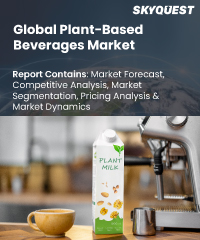
    Global Plant-Based Beverages Market size was valued at USD 33.3 Billion in 2024 and is poised to grow from USD 36.53 Billion in 2025 to USD 76.61 Billion by 2033, growing at a CAGR of 9.7% during the forecast period (2026–2033). 

    To boost profitability and strengthen their position in the dairy alternatives market, the players in the plant-based beverage sector have selected product launch and acquisition as their primary development strategies. To remain competitive in the international market, the leading firms have also relied on corporate expansion. 'Danone S.A. (France) ', 'Nestle S.A. (Switzerland) ', 'The Hain Celestial Group, Inc. (US) ', 'Blue Diamond Growers (US) ', 'SunOpta Inc. (Canada) ', 'Califia Farms (US) ', 'Ripple Foods (US) ', 'Oatly Group AB (Sweden) ', 'Vitasoy International Holdings Ltd. (Hong Kong) ', 'Kikkoman Corporation (Japan) ', 'Campbell Soup Company (US) ', 'Pacific Foods of Oregon, LLC (US) ', 'Elmhurst 1925 (US) ', 'Good Karma Foods, Inc. (US) ', 'Koia (US) ', 'Bolthouse Farms (US) ', 'PepsiCo, Inc. (US) ', 'The Coca-Cola Company (US) ', 'Silk (US)'

    The growing awareness of these health benefits and the increasing demand for healthier food and beverage options have been major drivers of the plant-based beverages market. Plant-based beverages are often lower in saturated fat and cholesterol than dairy-based drinks, which can help lower the risk of chronic diseases such as heart disease, diabetes, and certain types of cancer. Plant-based beverages can also be rich in nutrients such as vitamins, minerals, and antioxidants, which are important for maintaining overall health and preventing chronic diseases.

    The growth of the plant-based beverage market is a glaring example of how consumer preferences have shifted away from animal-based to plant-based goods. Environmental concerns, health knowledge, ethical or religious convictions, and understanding of environmental problems and animal rights are the main factors influencing this gradual transition towards a plant-based diet.

    The Asia Pacific region dominated the global market in 2022. The region's rising vegan population, particularly the preference of millennials for plant-based, all-natural, and healthful foods and drinks, is projected to increase demand for products there. In India, which has a population of 1.2 billion people, vegetarianism is practiced by 44% of the population, or around 500 million people, and by 1% of them, or roughly 5 million people, who are strict vegans

    Feedback From Our Clients

    Global Plant-Based Beverages Market

    Report ID: SQMIG30E2027

    $5,300
    BUY NOW GET FREE SAMPLE


