To request a free sample copy of this report, please complete the form below.

Our Clients

  • Schineder Electric
  • KSIA - Korea Semiconductor Industry Association
  • Hitachi Astemo Limited
  • Samsung Electronics
  • Halvo holdings
  • NTT corporation
  • AGC Inc
  • Siemens AG
  • Unilever
  • Merck Pharmaceuticals
  • Atlas Copco
  • Hologic - Medical Technology company
  • Novartis
  • Henkel
  • Reckitt
  • Schineder Electric
  • KSIA - Korea Semiconductor Industry Association
  • Hitachi Astemo Limited
  • Samsung Electronics
  • Halvo holdings
  • NTT corporation
  • AGC Inc
  • Siemens AG
  • Unilever
  • Merck Pharmaceuticals
  • Atlas Copco
  • Hologic - Medical Technology company
  • Novartis
  • Henkel
  • Reckitt
  • FAQs

    Tartaric Acid Market size was valued at USD 530.83 Million in 2024 and is poised to grow from USD 561.09 Million in 2025 to USD 874.24 Million by 2033, growing at a CAGR of 5.7% during the forecast period (2026–2033).

    The tartaric acid market is a highly competitive industry with several key players. These players are striving to develop new products and expand their product portfolios to maintain a competitive edge. Additionally, they are investing in research and development activities to stay ahead of the competition. To strengthen their position in the market, the key players are adopting various strategies such as mergers, acquisitions, partnerships, collaborations, and joint ventures. They are also investing in expanding their production capacities and distribution networks to increase their market reach. Quality standards and regulatory requirements are also given utmost importance by the market players to ensure consumer safety. They are investing in sustainable and eco-friendly production methods to meet the growing demand for natural and environmentally friendly products. Moreover, the market players are closely monitoring emerging market trends and consumer preferences to stay competitive in the market. The increasing demand for natural and organic products and growing awareness of the potential health risks associated with synthetic ingredients are some of the trends that are being closely monitored by the market players. 'Innovate (China) ', 'Caviro (Italy) ', 'Dastech International, Inc. (United States) ', 'Tarac Technologies (Australia) ', 'Noah Technologies Corporation (United States) ', 'Thirumalai Chemicals (India) ', 'Ninghai Organic Chemical Factory (China) ', 'ATPGroup (United States) ', 'The Tartaric Chemicals Corporation (United States) ', 'Changmao Biochemical Engineering Company Limited (China) ', 'Ningbo Jinzhan Biotechnology Co., Ltd. (China) ', 'Distillerie Mazzari S.p.A. (Italy) ', 'Tártaros Gonzalo Castello, SL (Spain) ', 'Actylis (United States) ', 'Anhui Hailan Biotechnology Co., Ltd. (China) ', 'Industria Chimica Valenzana I.C.V. SpA (Italy) ', 'AUSTRALIAN TARTARIC PRODUCTS (Australia) ', 'Derivados Vínicos S.A. (Argentina) ', 'Giovanni Randi SpA (Italy)'
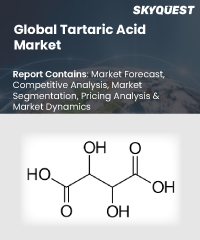
    The tartaric acid market is being propelled by the rising demand for natural and organic products. Being a natural and plant-based ingredient, tartaric acid is a perfect fit for meeting this growing demand. Furthermore, the increasing awareness among consumers about the potential health hazards associated with synthetic ingredients is leading to a surge in demand for natural alternatives such as tartaric acid. Consumers are becoming more cautious and vigilant about the products they consume, and they are willing to pay a premium price for natural and organic products that they perceive as healthier and safer. This shift in consumer preferences has led to a growing demand for natural ingredients, which is driving the growth of the tartaric acid market.

    Tartaric acid derivatives, including di-potassium tartrate (also known as cream of tartar) and calcium tartrate, are gaining popularity in various industries, including food, pharmaceutical, and personal care. These derivatives are finding increasing applications as food additives, acid regulators, and preservatives, among other uses. As a result, the demand for tartaric acid is growing, driving the overall growth of the tartaric acid market. With the increasing demand for natural ingredients in consumer products, tartaric acid derivatives are becoming more attractive as they are derived from natural sources such as grapes and citrus fruits. Additionally, these derivatives offer unique functional properties, such as stabilizing emulsions and improving texture, which are highly valued in the food and personal care industries. Therefore, the rising popularity of tartaric acid derivatives is a key trend in the tartaric acid market, with significant implications for the future growth and development of this industry.

    In the tartaric acid market, Europe has been a dominant region in the past and is expected to maintain its dominance in the forecast period. The reason behind this dominance is the region's high consumption of wine and other alcoholic beverages, which is a significant application segment for tartaric acid. Furthermore, Europe's dominance is reinforced by the presence of major tartaric acid manufacturers in the region.

    Feedback From Our Clients

    Global Tartaric Acid Market

    Report ID: SQMIG15E2286

    $5,300
    BUY NOW


